How to Get Brand Sponsorships as a Small Creator (Under 10K Followers)
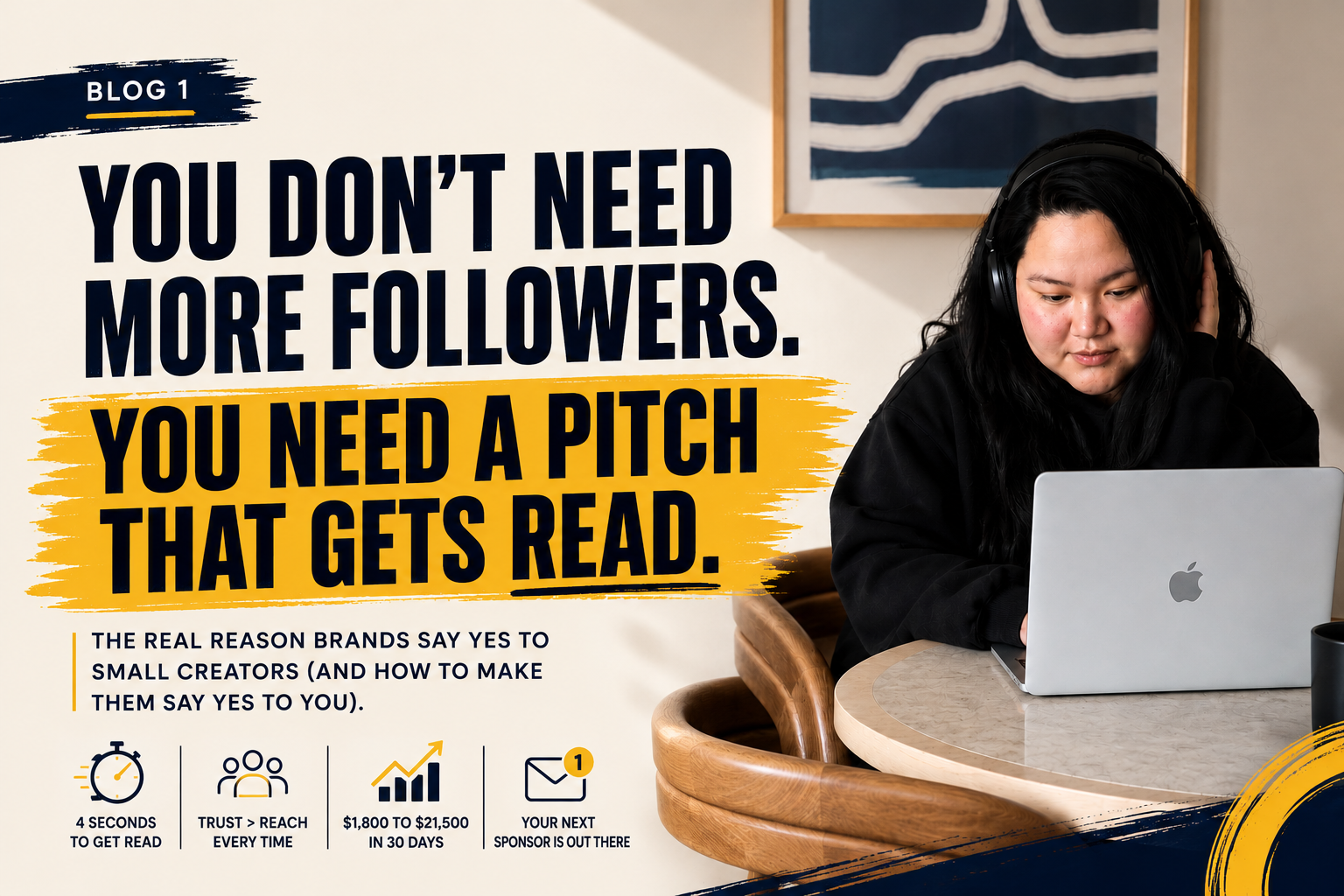
Somewhere along the way, someone told you a lie.
The lie sounds like this: get more followers first. Grow the channel. Hit some magic number. Then the brand deals will come.
So you wait. You post. You watch creators smaller than you announce sponsorships, and you tell yourself they got lucky.
They didn't get lucky. They got read.
I know because reading them is my job. I run brand partnerships for the Success Story Podcast, one of the biggest business podcasts in the world. I sit in the inbox where brands decide which creators get paid. In my first 8 months on that side of the table, I closed over $135,000 in sponsorship deals, every single one in writing.
And from that seat, I can tell you the thing nobody tells small creators.
Brands say yes to small creators every week. I watch it happen. They just say yes to the ones who pitch right.
What really happens when your pitch lands
Here is the part that stings a little.
When your pitch arrives in a buyer's inbox, it gets about four seconds. Not four minutes. Four seconds. In that time, the buyer is not counting your followers. The buyer is looking for the answer to one silent question:
Do I understand, right now, what this person is offering and who it reaches?
Most pitches fail that question. They open with a long story about the creator's journey. They attach nothing. They name no price. They ask for "a call to explore synergies." Delete.
The pitch that survives the four seconds is boring in the best way. It says who the audience is, what the placement is, and what it costs. That's it. Clear beats impressive every single time, because a confused buyer does not buy.
Your follower count never even entered the room.
Why small can win
Here is what buyers know that creators don't.
A big audience is a promise of reach. A small audience is a promise of trust. And trust is what brands are buying, because reach without trust is just noise.
If you have 5,000 people who read every post, reply to you, and buy what you recommend, you are not a small creator to a buyer. You are a precise one. There are brands whose ideal customer is exactly your 5,000 people, and reaching them through you costs that brand less than one bad ad campaign.
I have watched brands pay creators with a few thousand followers because the audience was the right fit and the pitch was clear. Fit and clarity beat size. Not sometimes. Most of the time.
So the question was never "am I big enough." The question is "who is already spending money to reach my exact people." That brand exists. Probably several of them. They spent money on ads this morning.
The month that taught me everything
I want to show you what fixing the pitch is worth, using my own numbers.
My first month selling sponsorships, I closed $1,800. One deal. And it was below our rate, because I didn't know how to hold a price yet.
The next month, I closed $21,500.
Same podcast. Same audience. Same me. Nothing about the product changed. The only thing that changed is that I finally understood what buyers say yes to, because I was reading their replies every day and the pattern was right there.
That gap, $1,800 to $21,500 in thirty days, is the size of the pitching problem. Not the audience problem. The audience never moved.
If pitching can do that for a podcast, it can do that for a channel with 6,000 subscribers. The math is smaller. The mechanism is the same.
What to do this week
I'm not going to leave you with motivation. Motivation doesn't close deals. Here is the plain version of where to start.
Find brands that already spend. Do not pitch brands and hope they sponsor creators. Pitch brands you can prove already sponsor creators. Look at who sponsors the channels and newsletters next to yours. If a brand paid a creator once, they have a budget and a habit. That is your list.
Make your offer stupidly clear. One or two placements, a plain description of your audience, a real price. If your pitch cannot be understood in four seconds, rewrite it until it can.
Reach out first. The brands that come to you are usually the bargain hunters. The brands with real budgets are answering the creators who showed up in their inbox with a clear offer. Waiting feels safe. It is just slow and underpaid.
Follow up one more time than feels comfortable. Most deals I close happen in the follow-up. Most creators stop exactly one message too early. Silence is rarely a no. It is usually a busy person.
Do those four things and you are already pitching better than most creators twice your size. That is not a compliment to you. It is a description of how low the bar is.
The honest part
None of this is instant. I get rejected every single day, and I do this for a living. In a good month, deals close slowly, with long back and forth, and then the brand pays on net 30, which means another month of waiting. Anyone who tells you sponsorships are fast, easy money is selling you a fantasy.
What I can tell you is that the game is learnable. I had never sold anything two years ago. I learned it by sitting in the buyer's inbox and watching what wins. You can learn it too, faster than I did, because someone can just show you the pattern instead of making you find it deal by deal.
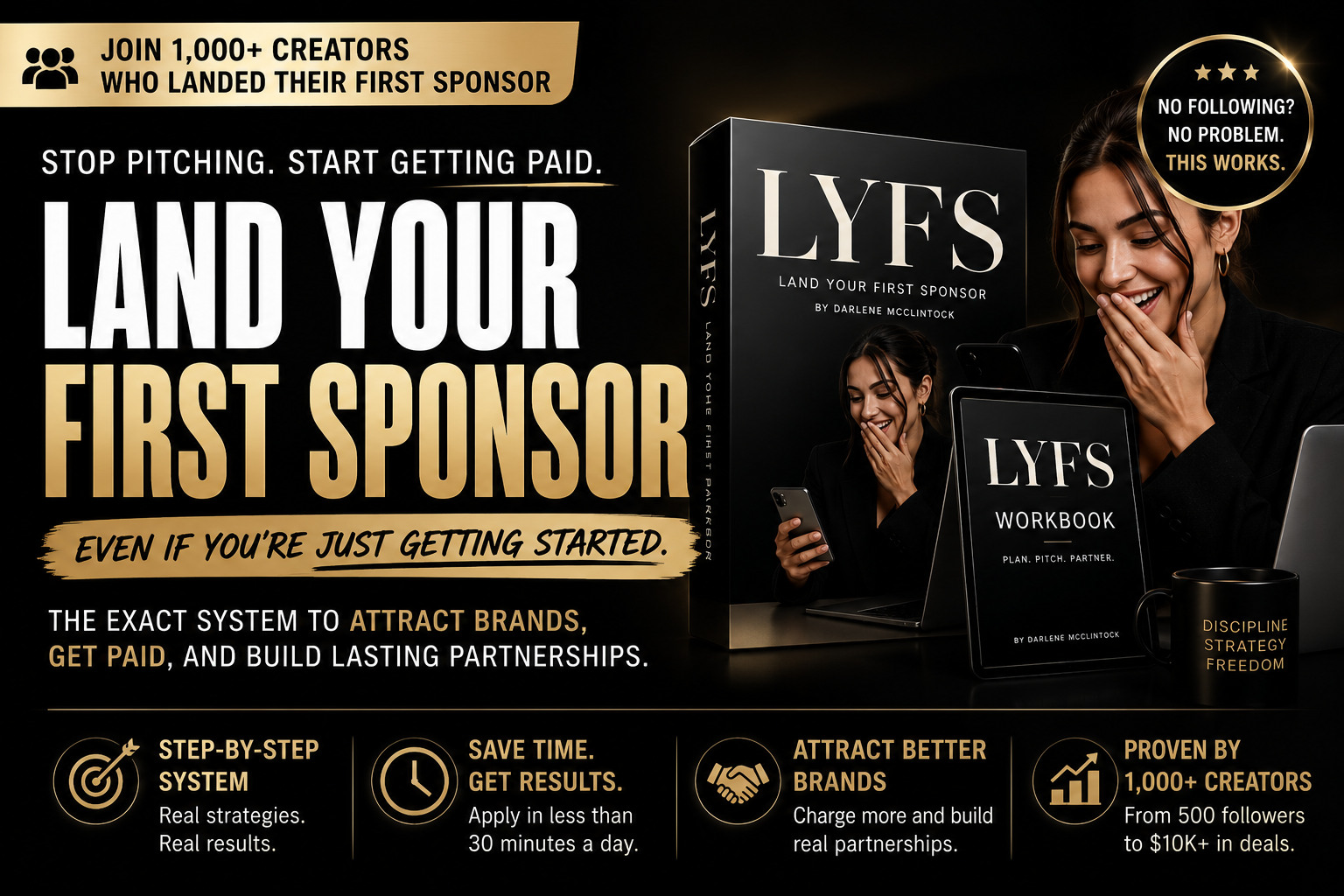
That is why I built the Land Your First Sponsor Kit. It is the whole system in one place: how buyers decide, the pitch structure that survives the four seconds, how to price yourself, how to follow up, how to close in writing. Every template and worksheet I use, with the reasoning behind them, for $149. You run it yourself, and you keep every dollar it makes you, forever.
And if you take nothing else from this page, take this: your next sponsor is not waiting for you to get bigger. They are waiting for you to get clear.
Darlene McClintock runs brand partnerships for the Success Story Podcast and has closed $135K+ in sponsorship deals, every one of them in writing.